The project
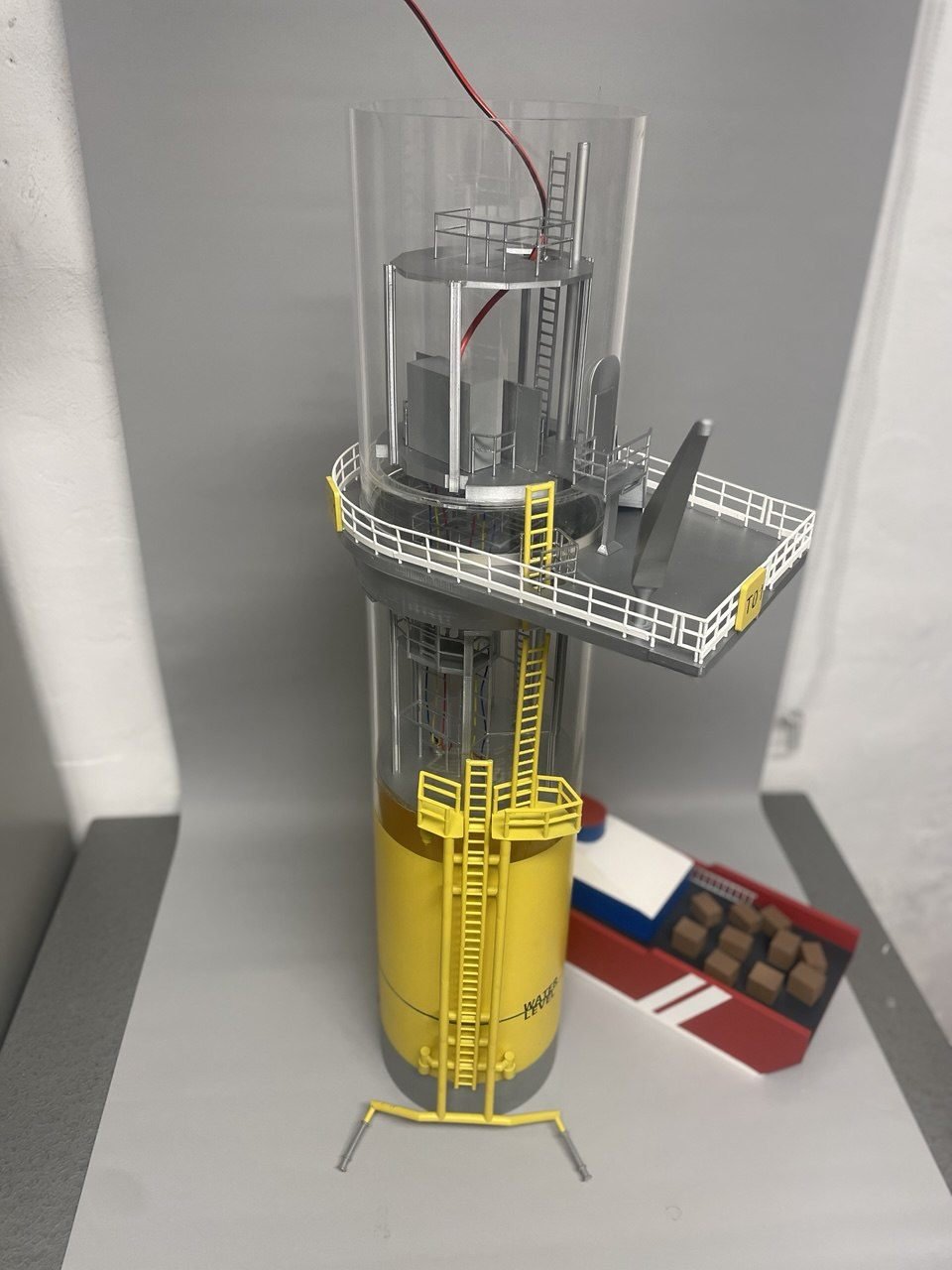
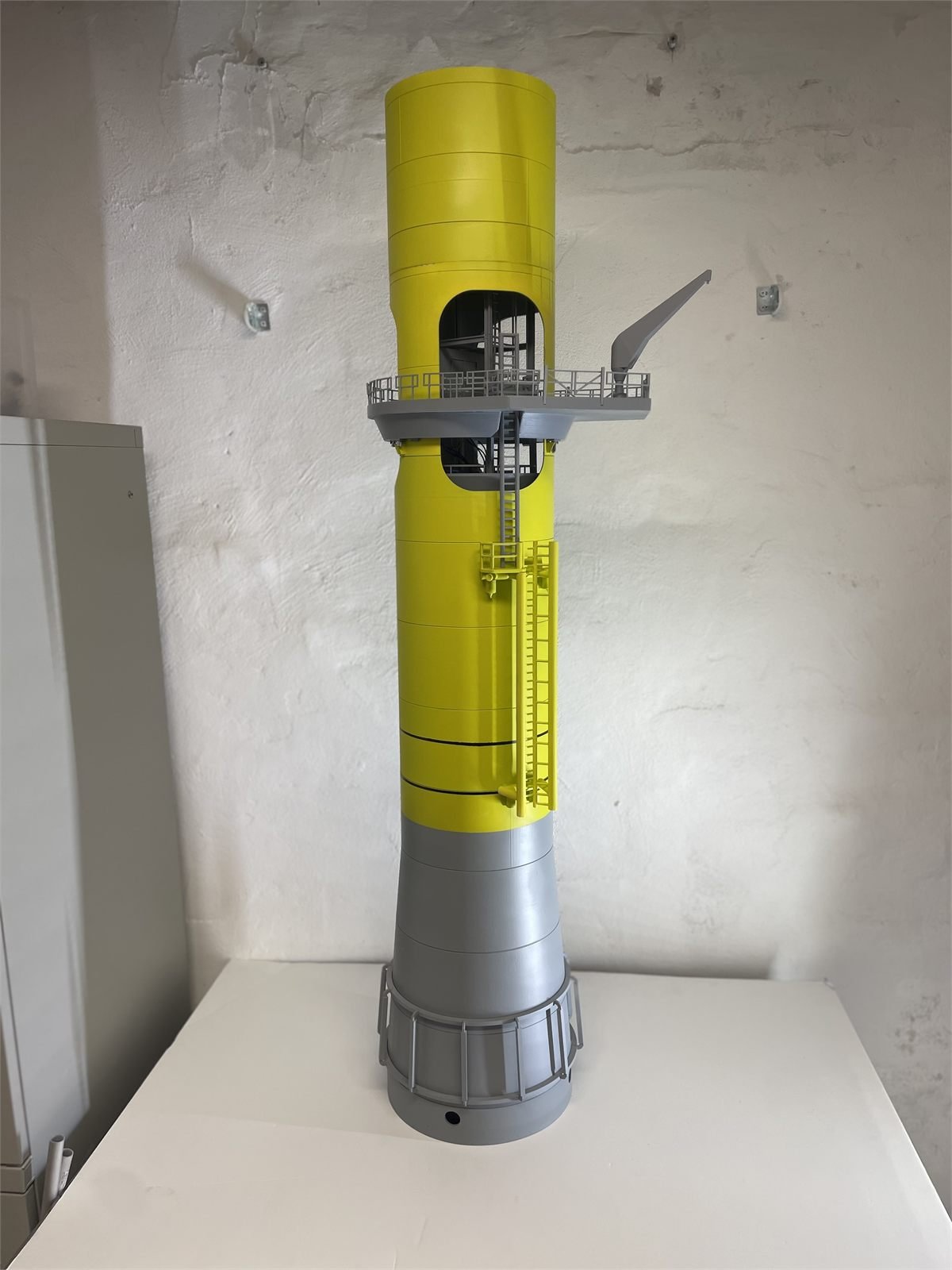
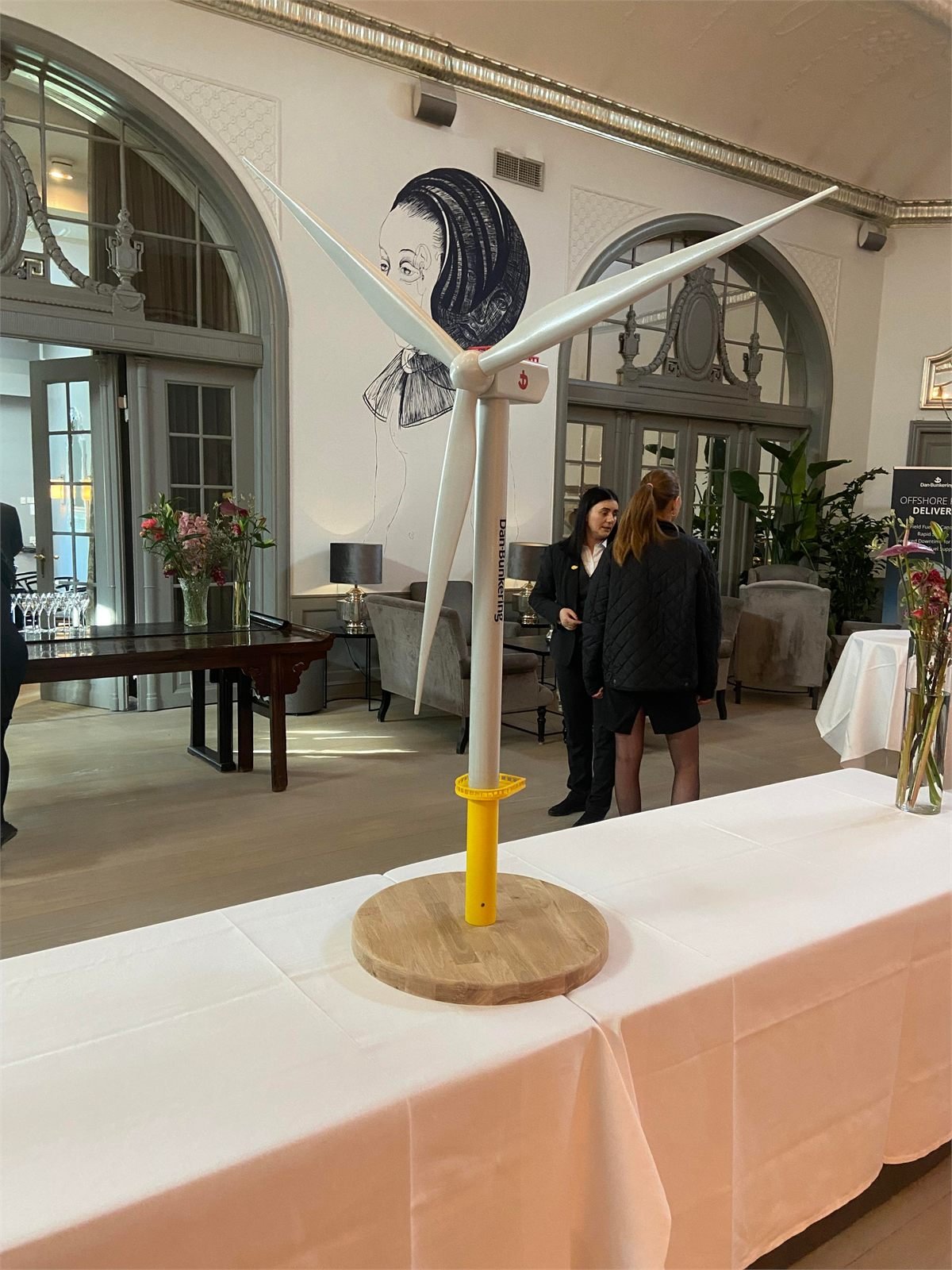
Built between 2023 and 2024 for offshore wind energy companies, these are scaled models of offshore wind turbine structures, sized to sit on an office desk during a meeting. They serve two audiences at once. For investors and visitors, the models show how the structure works and how it is expected to go together. For the crews who will actually do the work, they show what fits onto what and in what order, before anyone goes out to sea.
The approach
The clients supplied their own production 3D models, which are extremely complex because they exist to build real structures from. That is the wrong starting point for a physical model at 1:40. The geometry had to be heavily simplified, scaled down, and stripped back to only the details that still mean something at that size. Some details then had to go the other way and be made deliberately stronger than scale would suggest, because a part that is correct at 1:40 can be far too fragile to survive being handled in a workshop. Working out which details to remove and which to reinforce is most of the design work.
How it was made
The monopile is a clear acrylic tube, painted yellow over part of its length and left transparent elsewhere so the internal platforms, ladders and boat landing stay visible from outside. Most other components are 3D printed. Wood makes up some of the larger shapes, and laser cut details are glued onto printed parts where a flat profile is faster and crisper than a printed one. Metal is used for support beams that genuinely have to carry load. Fixed joints are made with inserts or plastic pins pushed into matching holes and then glued or friction fitted, while parts meant to come off use slots that locate and secure the piece when it is put back. The paint is sealed with a protective layer, because these models are handled constantly.
Where the same approach works
A model that gets taken apart in front of people is a different object from one that sits in a case. It has to survive repeated handling by people who are not being careful with it, and every joint has to work hundreds of times rather than once. The same approach suits assembly and maintenance training, investor and stakeholder presentations, technical sales meetings, and any situation where a sequence is easier to understand in the hand than on a screen.